

Among the many appealing facets of wine is the pleasure of finding bottles from unlikely and unexpected places. Those of us who have wandered down the path of vinous academia, whether through the sommelier world or WSET, are taught the foundational, blue-chip regions responsible for the majority of the world’s wine production and traditions. But keeping up with the new and emerging regions outside the syllabus is a daunting and dizzying task — and these places can be sources of both great value and intrigue.
The question I looked to answer this time was: can China make good or even great wine? I was browsing the LCBO, Ontario’s government-run alcohol retailer, when I came across a Cabernet Sauvignon from the People’s Republic, of all places. There is much I am accustomed to seeing stamped with “Made in China” — from cheap clothes to knockoff iPhones — but not premium wine. Growing up in a post-Soviet home instills a natural aversion for anything produced by communists — in the USSR, home-brewed moonshine (samogon) was all the rage under Gorbachev, until the Soviet distillation prowess led to the mass methanol poisoning of thousands. But my oenophile curiosity triumphed over my upbringing, and I walked home with a bottle of Longyu Estate Selection Cabernet Sauvignon 2023.
Naturally, I had to blind taste it against a familiar reference point, so I dusted off a bottle of Two Sisters Cabernet Sauvignon 2020, made in Ontario by winemaker Adam Pearce.
Ontario Two Sisters Cabernet Sauvignon 2020
Hailing from the Niagara River sub-appellation in Ontario, among the warmest in the region, the 2020 Two Sisters Cabernet Sauvignon presents deep ruby in the glass, with a subtle garnet tinge at the rim. The wine bursts with aromatic intensity; it takes little more than a swirl to summon a rich bouquet of dark fruit — black plum, blackberry, blackcurrant, and fig — alongside the clear presence of the winemaker’s hand, expressed through the tasteful oak-derived notes of vanilla, cardamom, cedar, and nutmeg.
The wine is developing, made evident by its 6-year age (2020 was among the finest vintages in Ontario’s history), and the resulting range of tertiary aromas present on the nose: cigar box, leather, graphite, mushroom, and a savoury note redolent of salami and game.
On the palate, the wine has perceptible but impressively smooth and well-integrated tannins, a rich, full body, and excellent flavour intensity, mirroring the indulgent character of the nose. Substantial acidity keeps the wine balanced and energetic, while the finish lingers languidly, in no rush to drop off. It is an unmistakably outstanding wine.
Longyu Estate Selection Cabernet Sauvignon 2023
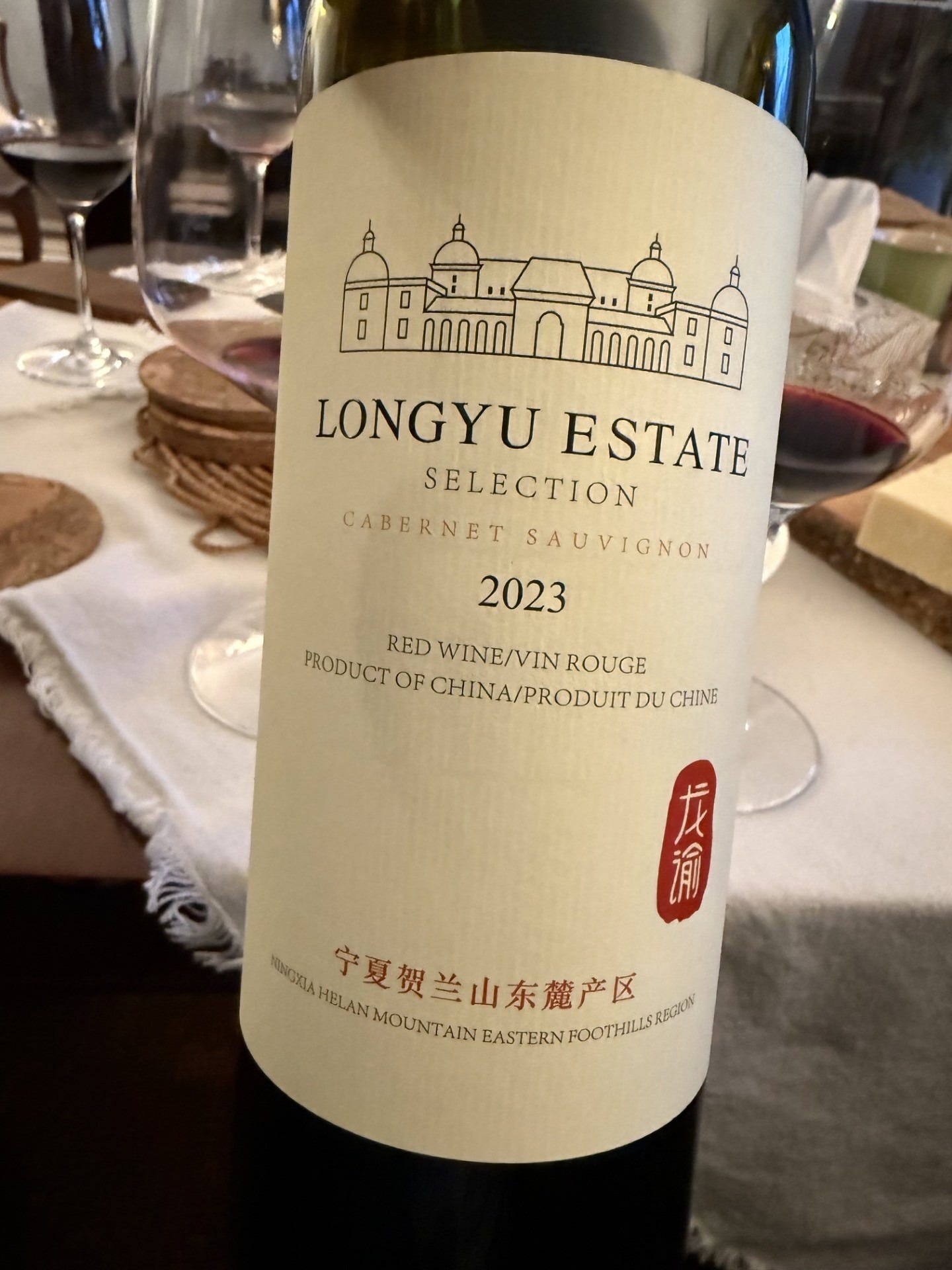
Let’s see how this compares…
The Longyu Cabernet Sauvignon comes from the foothills of the Helan Mountains in Ningxia, a province in north-central China that has been producing wine since the 1980s but only began attracting serious international attention in the 2010s.
Ningxia has become one of China’s most important fine-wine regions, particularly for Bordeaux varieties such as Cabernet Sauvignon and Merlot. Though it sits at a similar latitude to parts of southern Italy and Portugal, Ningxia is much farther inland and considerably higher in altitude, with vineyards around 1,100 meters above sea level. The result is a warm, dry continental climate with a significant diurnal range, allowing grapes to ripen fully during the day while preserving acidity during cool nights. Bordeaux, by contrast, has a warmer maritime climate, where proximity to the Atlantic brings more humidity, rainfall, and vintage variation.
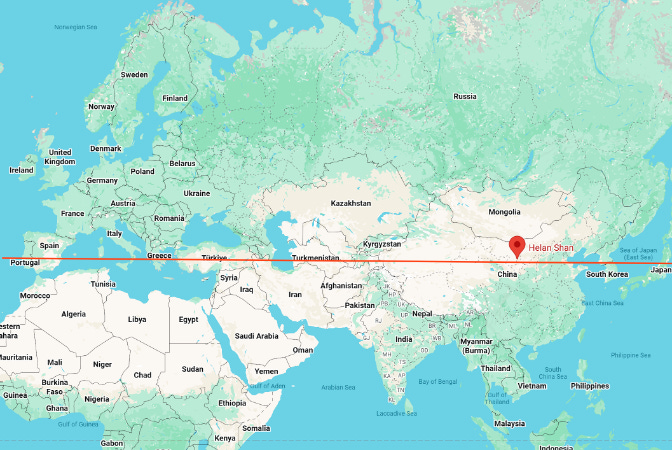
Setting aside one’s skepticism about China as a source of fine wine, Ningxia, at least on paper, has many of the raw materials one would want for serious Cabernet: sun, altitude, dryness, and enough nighttime cooling to preserve acidity. Then again, communism also tends to perform best on paper, so the real test would have to be what’s in the actual glass.
Speaking of which, the Longyu Cabernet Sauvignon presents as a uniform deep ruby — expected for a younger 2023 vintage. The nose has a lively, spry intensity, expressing an enticing range of fruit from red plum to blackberry, along with a perfumed floral note reminiscent of blooming violets. Contrasted with the Ontario wine poured alongside it, the Longyu is much more fruit-driven, with a more demure presence of oak, offering gentle embellishments of cedar, cardamom, cinnamon, and vanilla. There is not much development to speak of yet; this is very much a youthful wine.
On the palate, the region’s soaring altitude is evident in its puckering acidity, which balances the perceptible, slightly gritty tannins. There is good flavour intensity as well, with jammier and richer fruit than the nose initially suggests: red cherry, blackberry, blackcurrant, and plum. Though it is youthful now, it certainly has the structure to age comfortably for several years.
The finish is perfectly respectable, though not nearly as long as the Two Sisters. But then again, this wine is half the price.
So, can China make good wine — can the Reds make a good red? Absolutely. Had this been served to me blind, I would have guessed it was a regional-appellation Bordeaux or a full-bodied Cabernet from some cool-climate region. It is balanced, fruit-driven, and tastefully oaked for a reasonable $30. Sure, China may be propping up facsimile Chateaus to resemble their esteemed French counterparts like knockoff Rolexes — but they can make a very drinkable wine. My eyesight remains intact, no methanol was detected, and aside from supporting the communist regime, what’s not to like?